NIST SP 800-218 SSDF Mapping to Reproducible Build Controls
NIST now names reproducible builds and coded toolchains as core security controls.
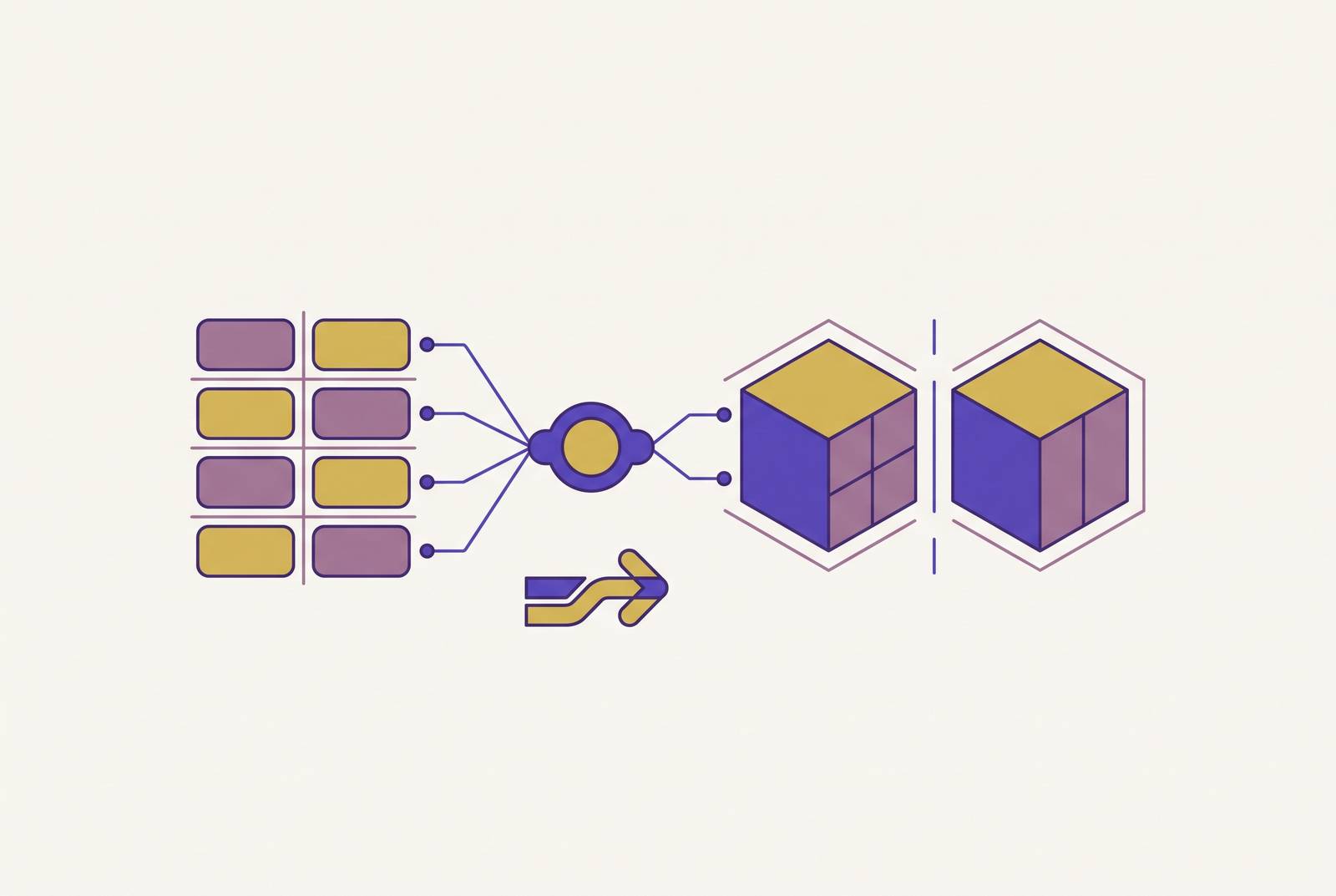
NIST SP 800-218, the Secure Software Development Framework, lays out 19 practices split across four groups: Prepare the Organization (PO), Protect the Software (PS), Produce Well-Secured Software (PW), and Respond to Vulnerabilities (RV). Each practice states an outcome rather than a tool or a product, which is what lets a federal contractor and an internal platform team both use the same document without either one being handed a shopping list. The version to plan against now is SSDF v1.2, published as SP 800-218 Rev. 1. NIST released the Initial Public Draft on December 17, 2025, and the public comment period ran through January 30, 2026. The draft adds two new practices: PO.6, which covers the need for improvement over time, and PS.4, which covers the need for robust and reliable software update strategies. Both carry real weight for how a build pipeline has to be designed, not just how it has to be documented. Federal attestation mandates tied to OMB have since been rescinded, but the 19 core practices still describe the same engineering problem they described before that mandate existed: how to build software whose origin, integrity, and composition can be checked by someone who wasn't in the room when it was built. That problem doesn't go away when a policy does, so mapping engineering controls to these practices remains worth doing on its own technical merits.
Reproducible builds appear by name inside the SSDF
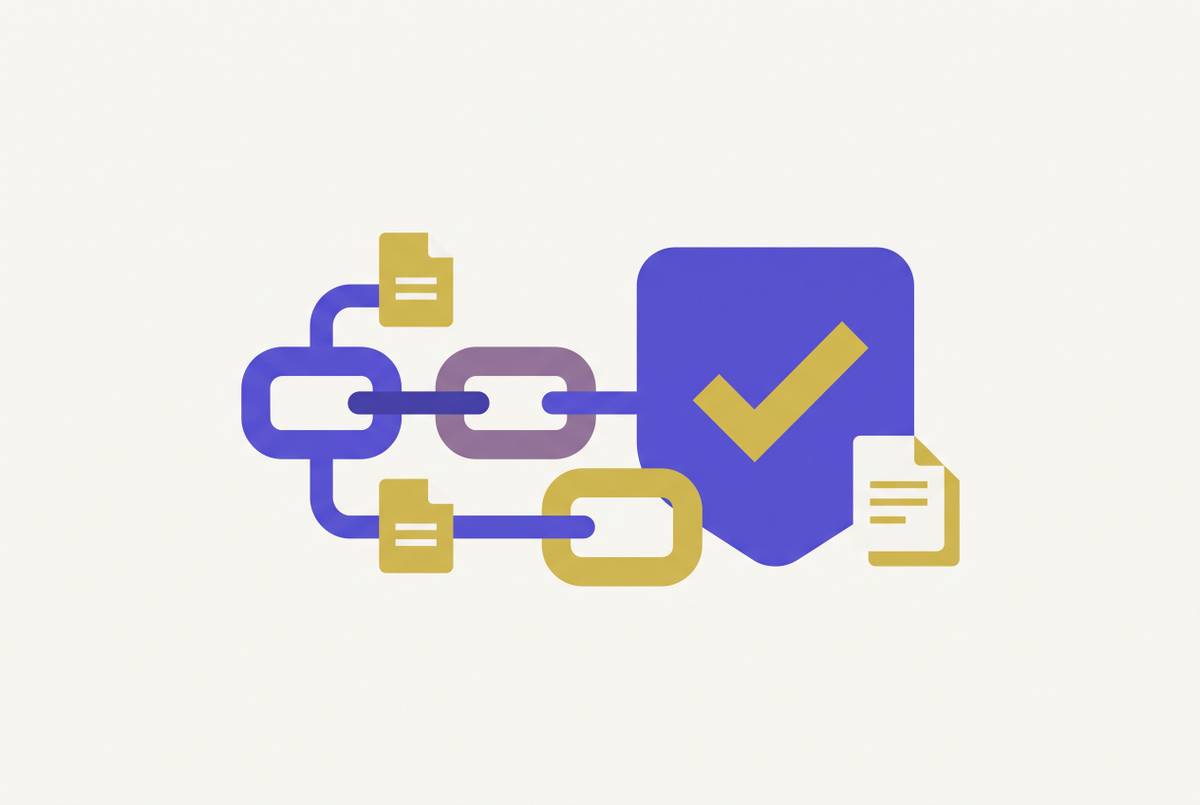
Reproducible builds aren't a clever reading of SSDF's intent. NIST writes them into v1.2 directly, under PO.3, naming "implement the technologies and processes needed for reproducible builds" next to "use code-based configuration for toolchains (e.g., pipelines as code, toolchains as code)." That's a specific technical mechanism, not a value statement. A reproducible build means that compiling the same source code, in the same build environment, with the same build instructions, produces a binary that is identical bit-for-bit, every time. Once that property holds, any difference between two builds of the same source becomes a signal rather than noise: malware injected into the build, a dependency quietly swapped out, or the build environment itself tampered with. The Enduring Security Framework working group backs this reading, naming reproducible builds alongside binary composition analysis as a core defense against supply-chain compromise. A fair objection exists here: PO.3 lists reproducible builds as an implementation example, not a mandatory task, so a team could in principle satisfy the practice some other way. Every example NIST gives throughout the SSDF works the same way. But the framework is built around outcomes, and the outcome PO.3 demands is build integrity that an independent party can check. Reproducible builds are the clearest, most auditable way to produce that proof, and a team that skips them has to find some other way to answer the same question when an auditor asks it. Pointing to a control the framework names outright is the simplest way to show alignment, because there's no interpretive gap for an auditor to push back on.
PO.3: Why codified toolchains and reproducible environments belong in organization preparation, not just in the build step
PO.3 requires an organization to define, implement, and maintain the tools, services, and infrastructure that support secure development. By naming "toolchains as code" and reproducible builds explicitly, v1.2 settles a question that often gets left to individual teams: who owns the build environment. The answer the framework gives is that environment definition is a decision made at the organization level, not something each project or each developer sets up on their own. In practice, that means a few concrete things have to exist. Build environments need to be defined declaratively and kept in version control, with every tool, runtime, and dependency pinned to a specific reference, so the environment is itself an artifact someone can inspect rather than a state that just happens to exist on one machine. Pipelines need to be written as code, specifying the exact environment for every job, so a developer's laptop, the CI runner, and production can't quietly drift apart from each other. And the approved toolchain needs to be something a developer or a CI runner can pull on demand, by name and version, rather than something described on an internal wiki page that nobody updates. Environment drift is the specific failure PO.3 is written to prevent. Once toolchains diverge across machines, builds stop being reproducible, provenance claims stop being verifiable, and the dedicated, tightly controlled build environment that SSDF v1.2 calls for stops existing in any meaningful sense.
PS.1 and PS.2: Protecting source code and build artifacts so provenance claims hold
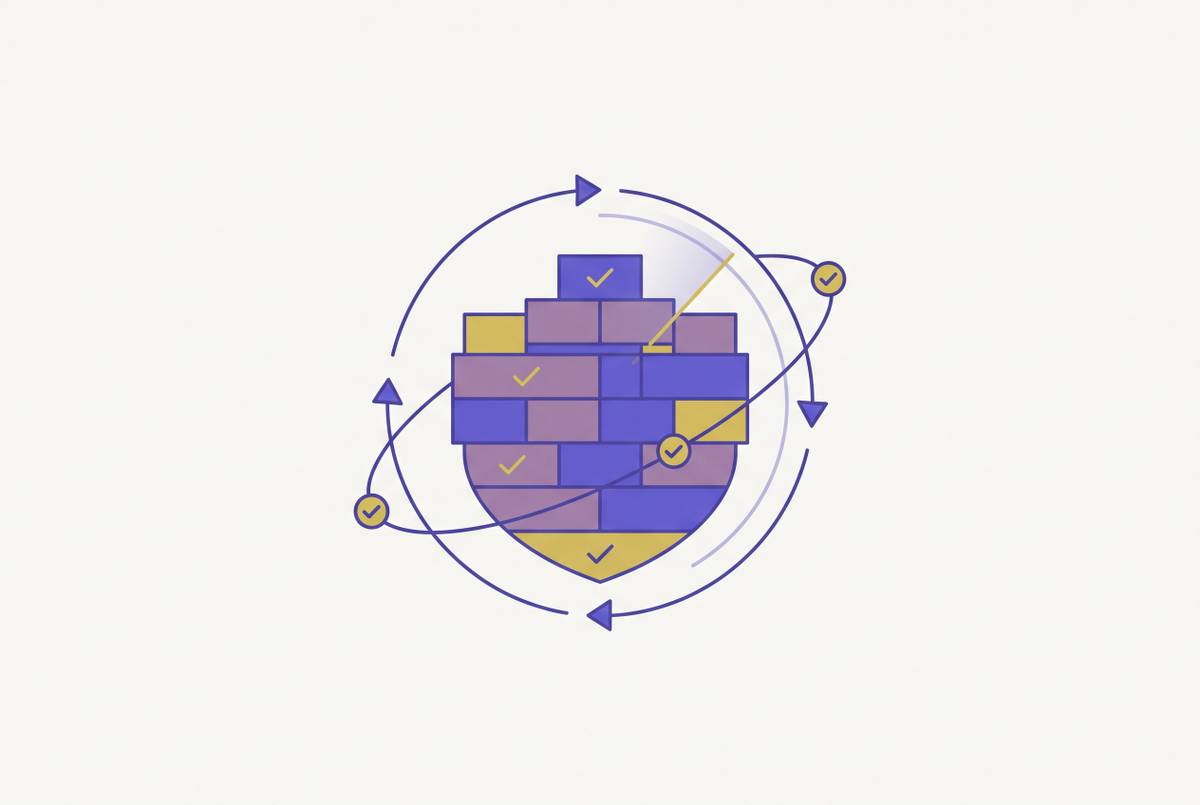
PS.1 requires protection of all forms of code from unauthorized access and tampering. PS.2 requires a mechanism for verifying release integrity, so that anyone acquiring the software can confirm it's legitimate and hasn't been altered. Together, these two practices ask for something specific: every artifact that moves through the pipeline needs a chain of custody that an outside party can check without having to trust the pipeline operator's word for it. Reproducible build infrastructure is what makes that chain checkable. Cryptographic hashes computed from the environment definition itself, not just from the source code, mean the hash changes if the toolchain changes, catching tampering that a source-only hash would miss. Commit and build signatures, the kind produced through Sigstore and Cosign, tie each artifact back to the exact pinned environment that produced it. Immutable checksum manifests and tamper-evident release repositories let a team outside the organization verify any past release and rebuild it if needed. None of this replaces signing; it complements it. A reproducible build proves the output is deterministic, and a signature proves the authorized pipeline, and no one else, produced it. A compromised build environment can quietly infect every artifact that comes out of it, and reproducible builds expose that compromise because an independent rebuild from the same inputs simply won't match a tampered output. The mismatch is the alert. Teams already working toward SLSA don't need to choose between frameworks here. SLSA's staged approach to provenance, tamper resistance, and build hardening maps onto PS.1 and PS.2 cleanly and can run alongside SSDF alignment work without conflict.
PS.3: Archiving releases and maintaining SBOMs as continuous pipeline output, not retrospective assembly
PS.3 requires an organization to securely archive the files and supporting data needed for each release, including integrity verification information and provenance data. SSDF v1.1 added PS.3.2 specifically, which requires collecting, safeguarding, maintaining, and sharing provenance data for every component in a release, typically through an SBOM. When auditors look at PS.3 evidence, they're generally checking for three things: machine-readable SBOMs in CycloneDX or SPDX format that list every open-source library, direct dependency, resolved transitive version, and cryptographic hash in the release; signed build provenance records, whether SLSA attestations or an equivalent, linking each released artifact to its specific build environment and source commit; and signed SBOMs sitting in tamper-evident repositories that let someone outside the organization verify a historical release without needing internal system access. The failure mode PS.3 is meant to catch is an SBOM assembled after the fact, reconstructed from memory or from whatever happened to be installed at release time, which is exactly the kind of document an auditor learns to distrust on sight. Reproducible build infrastructure removes that failure mode by construction. When the build environment is declarative and pinned, the SBOM becomes a deterministic output of the environment definition rather than a snapshot of a moment, and it can be regenerated and checked by anyone with access to the manifest. Deterministic SBOM generation tied directly to environment definitions, the kind some platforms now build in natively, puts the SBOM in the same place as the environment that produced it, so provenance data never has to be chased down separately from the build that created it.
PS.4: The new robust-update practice and its reproducibility precondition
PS.4 is new to SSDF v1.2, and it asks organizations to implement update strategies that are robust and reliable, covering the integrity of the update mechanism itself and not just the content being delivered. In practice, that breaks into three requirements. Updates have to move through a channel that's verifiable and tamper-resistant, so a recipient can confirm an update is authentic before applying it. The update process has to be auditable: an organization has to be able to show that a given update was built from a specific, verified set of inputs matching the provenance record tied to that release. And rollback has to actually work: prior releases need to be archived in a state that allows them to be reconstituted, not just stored as binaries that may no longer match the conditions under which they were originally built. All three requirements depend on reproducibility. An update built from a process that can't be independently reproduced can't be independently verified by whoever receives it, and if the update mechanism itself is compromised, as in a supply-chain attack, there's no external reference build to compare against and catch the compromise. Declarative environment manifests with pinned references solve the rollback piece almost incidentally: switching to a prior generation of the manifest is the rollback, with no manual reconstruction step involved, which is the exact operational pattern PS.4's reliability language implies. Teams that have already put PO.3 and PS.1 through PS.3 controls in place are mostly done with PS.4 as well. The infrastructure that makes builds reproducible and releases archivable is the same infrastructure that makes updates verifiable and rollbacks reliable.
PW.4: Managing third-party components so dependency provenance satisfies SSDF at the point of acquisition
PW.4 requires acquiring and maintaining well-secured third-party components, and checking that acquired components meet the organization's own requirements across their entire life cycle, not just at the moment they're pulled in. The threat this practice responds to has gotten sharper in recent years: malicious package activity in ecosystems like npm has risen, and a single compromised external tool or dependency can give an attacker deep access to internal systems, with the compromise riding invisibly inside every downstream artifact. The controls that satisfy PW.4 start at acquisition, not at release. Dependency references in the build definition need to be pinned to exact versions rather than left as floating ranges, so a third-party component can't silently update itself to a compromised release between builds. SBOMs need to enumerate every transitive dependency along with its cryptographic hash, so that when a new CVE is published, the affected component can be identified quickly without rescanning every artifact in the inventory. SSDF also treats this as an ongoing obligation rather than a one-time gate: collecting, safeguarding, maintaining, and sharing provenance data for every component, and checking continuously for new known vulnerabilities, has to happen throughout the release's life, not just when it ships. The automotive industry has started formalizing this exact idea. Recent SAE technical work documents a blockchain-plus-reproducible-build approach to automotive software supply chain security, treating provenance tracking as an engineering discipline built into the development process rather than a form filled out for compliance purposes.
CI/CD pipeline design and the PW practice group
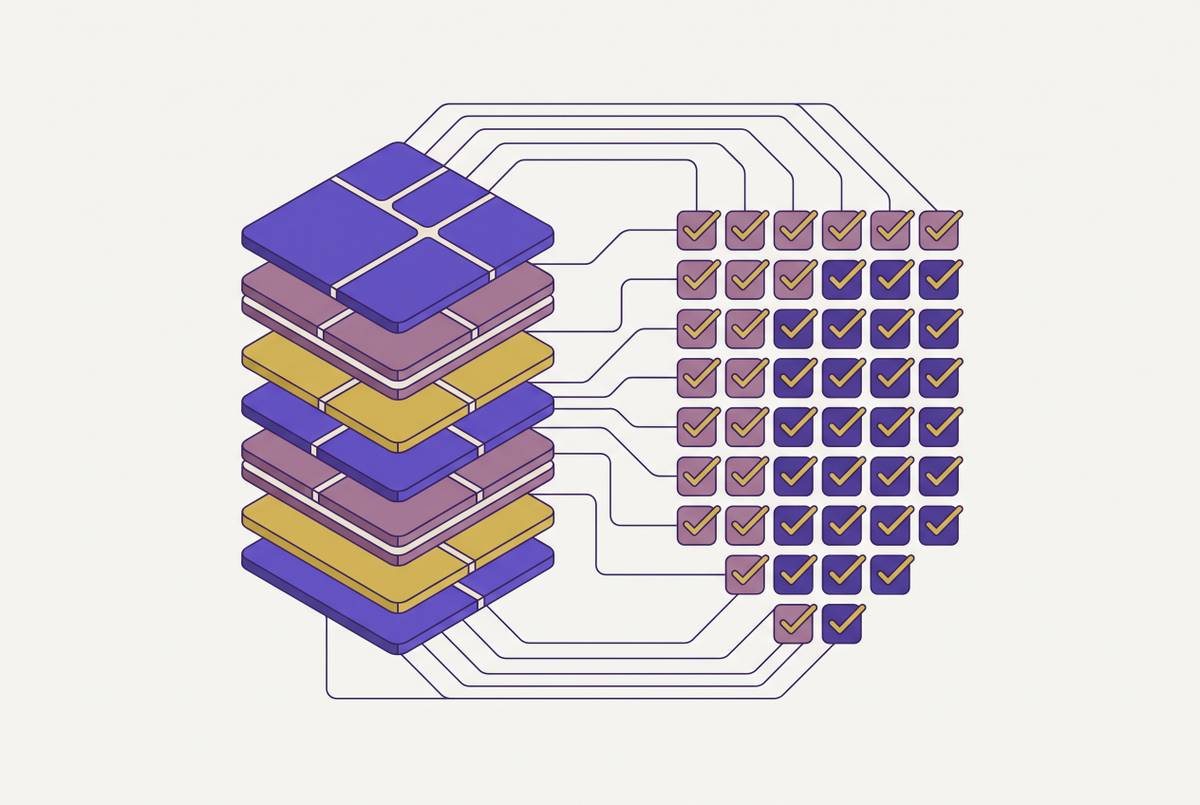
Taken together, SSDF's build-integrity requirements across the PW group point to one architectural rule: every build job has to run in an environment that is isolated, ephemeral, fully specified, and independently verifiable. Most ad-hoc CI setups violate this rule in some way, usually by letting runners persist longer than a single job or by leaving environment state only partially defined. Meeting the rule in practice means a few things run on their own, as automated pipeline steps. Build runners spin up from the same declarative environment definition used in development, and get destroyed once the build finishes, closing off the kind of cross-build contamination that otherwise makes a supply-chain compromise visible only after the damage is done. Environment definitions live in version control next to the application source, so the exact environment behind any given commit can be reconstructed later for forensic review. Provenance artifacts, including signed SBOMs, SLSA attestations, and build logs, get emitted as pipeline outputs on every run, not written up afterward as documentation. And every build artifact carries a hash-level environment identifier, so when a CVE gets disclosed, triage becomes a matter of checking which deployed artifacts carry a hash tied to the vulnerable component, rather than grepping through logs or rescanning container images one by one. Organizations that built these controls into their pipelines directly didn't lose anything when the central attestation mandate was rescinded, because the checks and the provenance tracking keep reducing real risk regardless of which policy happens to be in force at a given moment. None of this is extra work layered on top of normal development. It falls out naturally once the environment manifest, not the binary and not the source tree alone, becomes the thing that gets promoted from one stage to the next. The same architectural decision, promoting the environment manifest rather than the binary, is what makes the builds reproducible.
Mapping SSDF to reproducible build controls: a practice-level summary practitioners can act on
The mapping that runs through the preceding sections comes down to five connected points. PO.3 is satisfied by declarative, version-controlled environment manifests, treated as toolchains as code, distributed as named and versioned objects that developers and CI runners can pull directly, with codified pipelines enforcing the approved environment on every run; the environment manifest itself, committed alongside application code, is the artifact an auditor will want to see. PS.1 and PS.2 are satisfied by cryptographic hashes derived from the build inputs on every artifact, digital signatures on outputs through mechanisms like Cosign and Sigstore, tamper-evident artifact repositories, and reproducibility checks used as a standing integrity test, with a signed provenance attestation tying an artifact to its build environment hash and source commit, giving every PS.1 and PS.2 obligation a concrete mechanism. PS.3 is satisfied by SBOM generation built into the pipeline itself, in CycloneDX or SPDX format, alongside immutable archived release bundles that include the SBOM, the provenance record, and a reference to the build environment, with the signed SBOM archived next to the release binary as the artifact that matters most. PS.4, new in v1.2, is satisfied by using reproducible builds as the verification mechanism for update integrity, declarative environment manifests that support atomic rollback to a prior generation, and update delivery that's verifiable, tamper-resistant, and tied back to provenance records. PW.4 is satisfied by pinned dependency references in the build definition, transitive SBOMs carrying cryptographic hashes for every dependency, continuous CVE triage run through hash-level environment tracking, and retained access to historical package versions so a known-good dependency state is always available to roll back to, with the transitive SBOM itself serving as the artifact that lets a CVE get mapped to affected builds without a rescan. The same piece of infrastructure sits under all five mappings: a declarative environment definition that's human-readable, pinned, version-controlled, and reproducible, and every compliance output described here flows out of that one artifact. SSDF v1.2 was still a draft as of its December 2025 publication. The new practices, PO.6 and PS.4, should be treated as requirements to plan for now, with the engineering work done ahead of the final publication.
Sources
- NIST Special Publication 800-218 Secure Software Development
- NIST Special Publication (SP) 800-218 Rev. 1 (Draft), Secure Software Development Framework (SSDF) Version 1.2: Recommendations for Mitigating the Risk of Software Vulnerabilities
- NIST Special Publication 800 NIST SP 800-218r1 ipd Secure Software Development
- 2025-01-0456: Advancing Automotive Software Supply Chain Security: A Blockchain-Reproducible Build Approach - Technical Paper