ISO 27001 2022 Annex A Controls Satisfied by SBOM Programs
SBOMs map to specific ISO 27001 controls and auditor expectations.
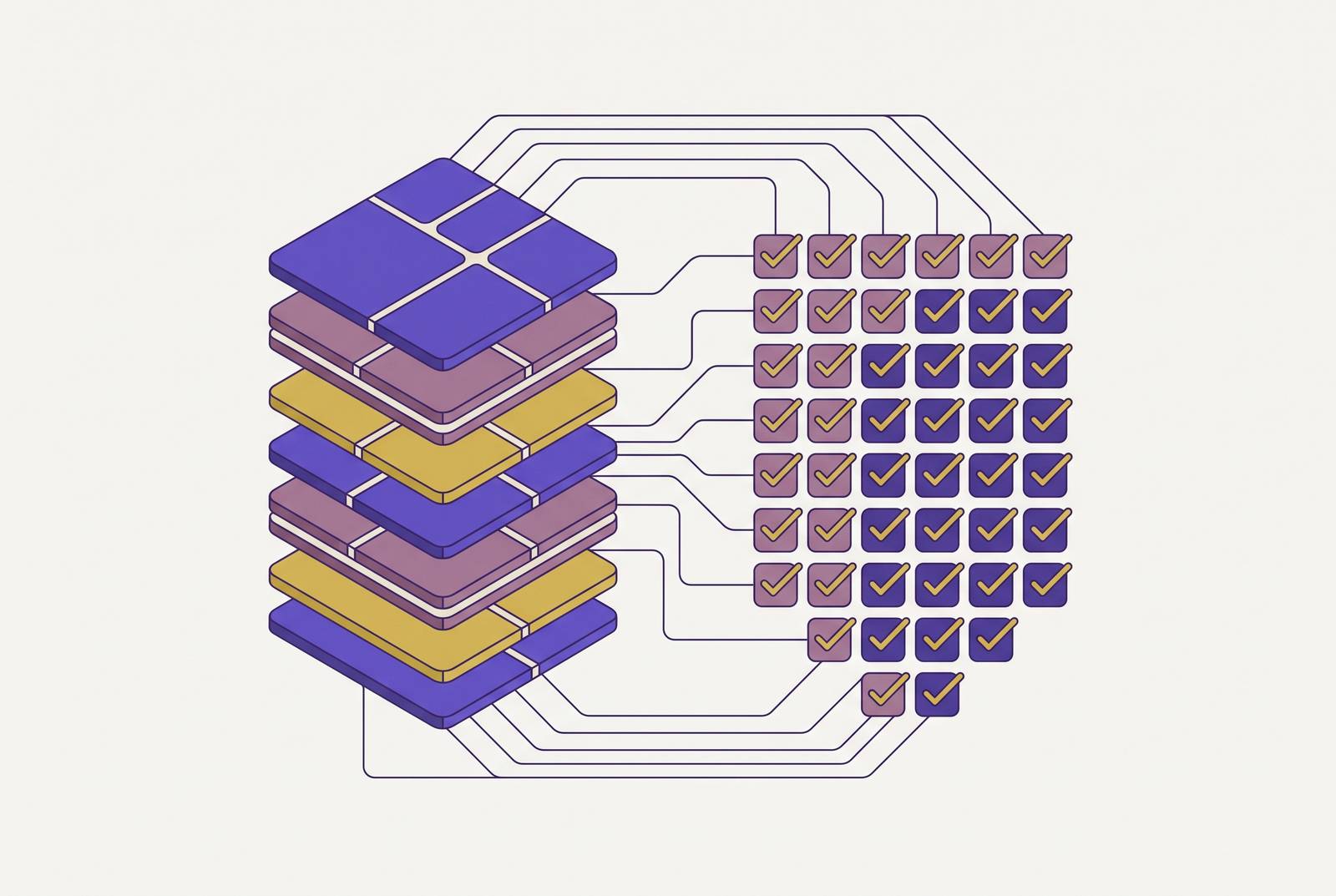
An SBOM program goes beyond general support for compliance by producing evidence for specific ISO 27001:2022 Annex A controls. Its value depends on how well the component inventories link to supplier reviews, vulnerability treatment, release gates, and trustworthy builds. Those links let one pipeline serve several controls and frameworks, so teams can use the same evidence across audits.
Why the 2022 Annex A revision made component-level visibility an audit expectation
IAF MD 26:2023 set the three-year transition period that ended on 31 October 2025, after which accreditation bodies withdrew certificates that still showed the 2013 edition. The 2022 standard is now the operative baseline. Annex A contains 93 controls across four themes, with 37 Organizational, 8 People, 14 Physical, and 34 Technological controls. The restructuring consolidated supplier relationship controls A.5.19–A.5.23 in the Organizational theme, placing supply chain security firmly within management’s responsibilities rather than treating it only as a technical or procurement concern.
A.5.21 strengthened the earlier ICT supply chain control’s treatment of component authenticity, integrity verification, and supplier security obligations, against the background of incidents such as SolarWinds. ISO/IEC 27002:2022 clause 8.28 implementation guidance also explicitly references component inventory and SBOMs under Secure coding, the only brand-new control in the development family. Teams already generating SBOMs for buyers or regulators have a substantial part of the evidence needed to demonstrate how their applicable controls operate.
How an SBOM program maps to discrete Annex A controls, and what each one expects as evidence
A.5.21, Managing information security in the ICT supply chain, is the primary anchor for SBOM evidence. It addresses risks across hardware, software, and services, including purchased commercial software and open-source dependencies. Expected evidence includes SBOM requirements in contracts or procurement policy, a documented ingestion and review process, and vendor risk classifications in the supplier inventory. The implementing practice should require outsourced teams to deliver a comprehensive CycloneDX or SPDX SBOM with every release for downstream CVE scanning and license review, while the Statement of Applicability should explicitly connect SBOM generation and vulnerability management to A.5.21.
A.8.8, Management of technical vulnerabilities, requires timely vulnerability information, evaluation of exposure, and appropriate treatment for systems “in use.” The SBOM gives that phrase a component-level answer, including third-party and open-source components inside the organization’s own software. Evidence must extend beyond the inventory to continuous CVE feed matching, dated triage tickets with documented SLAs, and remediation records that auditors can sample by release. A match is only the beginning of treatment. Declaring A.8.8 applicable while producing a policy without scanning results or remediation records leaves the central operating claim unsupported.
A.8.25, Secure development lifecycle, makes SBOM generation part of the documented rules for developing software and systems securely. Its evidence consists of the SDLC policy, release gates that require an SBOM, and CI configuration showing that generation runs per release. The policy should specify cadence, formats, depth, and ownership at the level the team actually operates. Ambition is not evidence of a working control. A policy promising broader coverage than the pipeline delivers creates an avoidable discrepancy between the documented lifecycle and the release process.
A.8.28, Secure coding, connects the component inventory to third-party library management. A coding standard, dependency review gates, and SBOM diffs for each release show the rules and the changes they cover. Inventory alone does not show dependency review. A.8.30, Outsourced development, extends secure coding and testing expectations to contracted work through supplier obligations. SBOM delivery is a recommended implementation practice for that work under A.8.30, so the evidence must still demonstrate the broader coding and testing expectations.
A.8.31, Separation of development, test, and production environments, requires evidence about the environments around the software. An environment inventory, promotion pipeline, and documented access split show how the environments are kept separate. Version-controlled environment definitions keep a configuration trail that teams can retrieve and also use to support A.8.9, Configuration management. These controls require more than a component list. An SBOM cannot substitute for access separation, and an environment description without version history does not establish which configuration produced a particular release.
The Inventory of information and other associated assets control gives the SBOM a place within the broader asset register. Asset inventories have long focused on servers and laptops, but auditors also ask what is in the software. The SBOM supplies that component-level layer. Linking it to the A.5.21 supplier inventory, with the same risk classification method for both, ties what is in the software to the third parties responsible for it. Leaving those inventories disconnected weakens the organization’s ability to present a coherent account of risk across hardware, software, and services.
What auditors actually test at Stage 2 and surveillance audits, and where SBOM programs fail
Stage 2 tests whether controls operate over time. An auditor can ask engineering to show the CI configuration that generates an SBOM for each release, then select a release from six months ago and request its inventory. That sample tests storage, retention, and artifact traceability together. A file generated now cannot show what was stored for that past release. The auditor can then compare the demonstration with the secure development policy, looking for differences in scope, cadence, and release coverage.
A vulnerability sample follows a different chain of evidence. The auditor traces a CVE from publication through its match against the component inventory, the triage ticket, and remediation within the stated SLA. Dates make the process open to examination. For A.5.21, a critical supplier sample similarly calls for the vendor’s SBOM and evidence of the review process used to assess its component risk, rather than only the organization’s own release artifacts.
Policy language promising “all software” or “continuous” coverage creates claims that the evidence must support across the relevant scope and period. One product with real, dated automation is stronger evidence than unsupported claims of broad coverage, although it does not establish coverage for other products. Supplier agreements can leave similar gaps in the evidence for A.5.20. Commercial and open-source software rarely comes with agreements that commit suppliers to security, so even sound AWS and GitHub contracts leave that gap at the component layer.
Where supplier commitments are unavailable, the notes’ recommended mitigation is a compensating control in the Statement of Applicability, combining risk acceptance with SBOM-based monitoring. Surveillance audits then revisit the same evidence points on cadence. Automation prepared once for Stage 2 but left unmaintained will fail that repeated examination. An SBOM program needs evidence gathered over time and marked with timestamps to pass one audit cycle after another.
Why SBOM evidence is insufficient without a trustworthy, reproducible build environment behind it
An SBOM describes software contents, but its assurance is weaker when it cannot be tied to the build that produced them. An inventory from an untrusted or drifting environment may meet an artifact-level expectation under A.5.21 while leaving A.8.31 and A.8.9 unresolved. The missing link is the build’s provenance. In-toto attestations and SLSA provenance describe the who, what, and where of builds, connecting the released artifact to its production process. Signed provenance verified against expected values strengthens that connection in a way that possession of provenance alone does not.
Ephemeral, isolated builders, limits on parameters that could inject malicious content, and build configuration kept in source control make it clearer which inputs go into a build. Reproducibility provides another way to test that configuration. When the same source and defined inputs produce the same output, the environment becomes more than a description of intended practice. These properties let auditors check environment separation and configuration history for A.8.31 and A.8.9, though they still need the documented access split as evidence of separation.
A policy that admits only signed artifacts with valid provenance and policy-compliant SBOMs prevents the evidence chain from ending at release generation. Hermetic builds with locked dependency snapshots and ephemeral builders further constrain supply chain inputs. Deviations then become signals for exposure assessment under A.8.8. The inventory must also reach beyond direct dependencies, because an incomplete component boundary leaves part of that assessment unsupported.
CISA’s 2026 guidance states that an SBOM should include information for all components that make up the target software, including transitive dependencies. A declarative, version-controlled environment manifest records the exact package versions, hashes, and inputs behind a build. It anchors the inventory to a specific environment state. Retaining that history gives auditors a basis for examining past releases, while provenance and reproducibility establish why the associated SBOM deserves trust.
Building one pipeline that satisfies multiple controls and multiple frameworks at once
The efficient implementation is one SBOM pipeline whose artifacts map to every relevant control, rather than separate collection processes for each audit. Release inventories, CI configuration, review records, and evidence of vulnerability treatment can each support different claims while drawing on the same facts. ISO 27001 uses these artifacts for A.8.8, A.8.25–A.8.28, and A.5.21. The same evidence also supports SOC 2 CC7.1 and CC8.1, and PCI DSS 4.0 Requirement 6.3.2’s component inventory. Buyer due-diligence questionnaires draw on it for SBOM requests and supply chain questions, although each framework retains its own assessment requirements.
BSI TR-03183 references ISO/IEC 27001:2022 in Part H and SPDX by name and version in Part 2, rather than referencing both together in one document or using the ISO/IEC 5962 designation there. Those distinctions keep the mapping precise. Sector overlays including APRA CPS 234, OSFI B-13, and PRA SS2/21 add requirements over the ISO 27001:2022 base. Evidence already collected for the common controls reduces the additional collection work without implying that it satisfies every overlay-specific obligation.
To make that reuse operational, the ISMS document set should describe the SBOM practice consistently across its three relevant documents. The secure development policy records cadence, format, depth, and owner, while the Statement of Applicability explains implementation for A.8.8 and A.8.25. The risk register records component-level risks identified through SBOM data, including EOL dependencies, with owners and treatment. Those entries demonstrate a functioning risk process. A shared control library then links each pipeline artifact to the requirements it supports, so teams can reuse evidence across audit cycles even when frameworks use different terms.
A deterministic SBOM derived from an environment manifest can underpin hash-level CVE blocking and patching, with input-derived hashes identifying deployments containing an affected component. That enables targeted patching without broad rescans and puts A.8.8’s exposure assessment and treatment requirements into practice at scale. The investment is therefore not ISO 27001-specific. SBOM infrastructure built with reproducibility and provenance from the start becomes a shared evidence layer for modern compliance, while infrastructure bolted on separately for each audit imposes the same cost repeatedly.