Build Environment Provenance and Environment Drift Risk
Environment drift in build systems creates security exposures that attackers actively exploit.
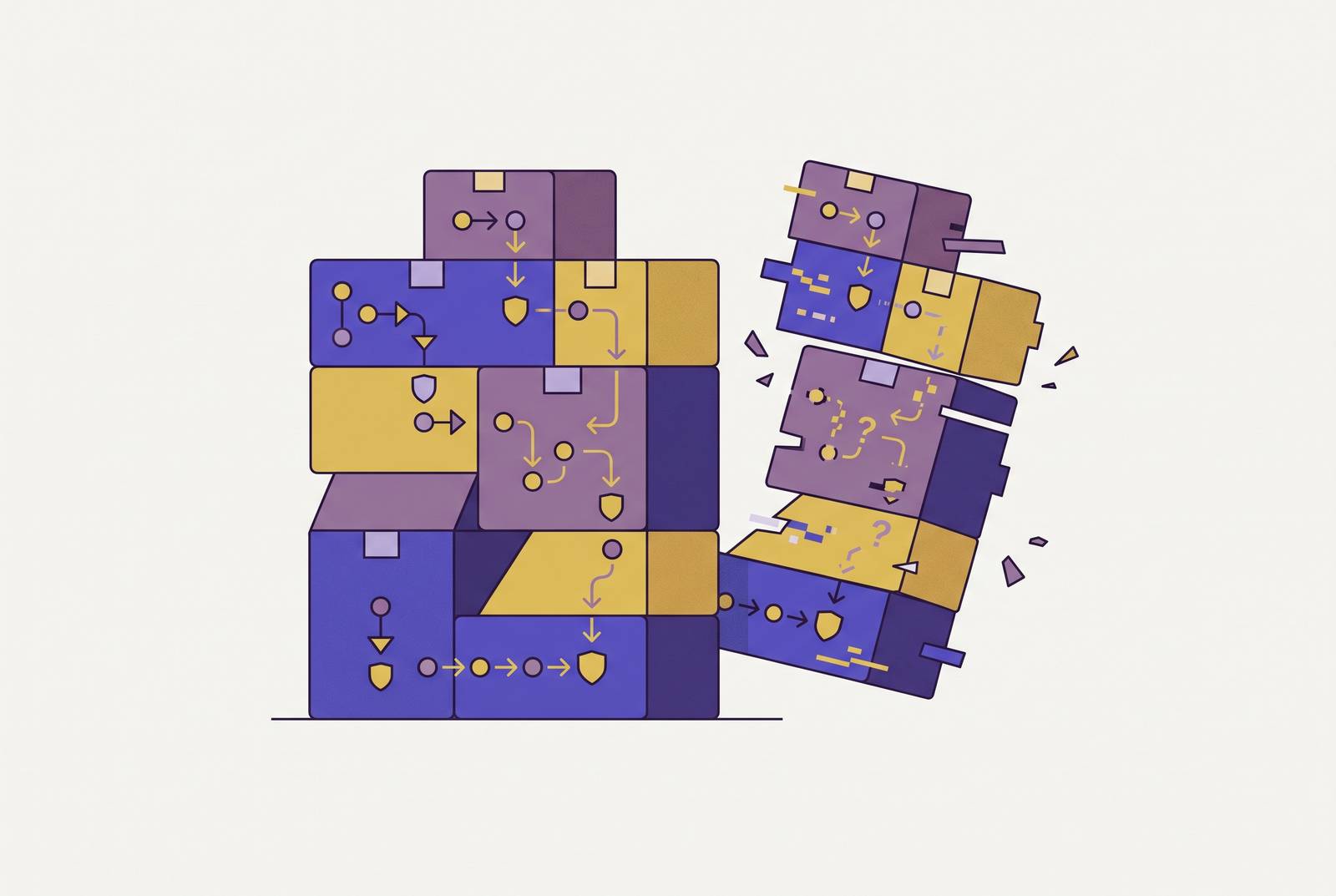
For years, engineering teams have treated environment drift as an annoyance: the "works on my machine" problem that costs an afternoon of debugging and a round of apologies in standup. That framing is wrong, and it is wrong in a way that carries real consequences. Environment drift is any unplanned change in build inputs, dependencies, configuration, or runtime state that causes one instance of a system to behave differently from another. Once a security team understands that definition, drift stops looking like a nuisance and starts looking like an open door: an unpinned library, a silently altered secrets-handling path, a policy check that no longer fires the way it did when someone last reviewed it, none of which require an attacker to write a single line of malicious code. NIST CSF 2.0 (PR.PS-01) and NIST SP 800-53 Rev 5 (CM-2) already treat configuration consistency and change control as core operational controls, not DevOps busywork. Regulators and auditors are prepared to call unmanaged drift what it is: a control failure.
The mistake most security teams make is filing drift under the DevOps hygiene column and moving on. That classification misses the point. Runtime and dependency changes that occur after deployment can alter a system's security posture without anyone touching application code, and a team that only watches for intentional changes will miss every one of them. The environment that passed review and the environment now running in production are, in a meaningful number of cases, no longer the same environment. That distinction, between what was tested and what is live, is where the rest of this argument lives.
How drift enters the build layer and compounds silently
Drift at the build layer is dangerous precisely because no one sees it happen. It does not arrive as a single bad decision; it accumulates through a string of small, individually defensible changes, none of which any one person ever reviews as a whole. The most common mechanical cause is the unpinned transitive dependency. ActiveState's 2026 guide identifies exactly this, unpinned transitive dependencies alongside unmanaged system libraries, as the primary mechanical causes of environment drift and the collaboration failures that follow from it.
System-level drift adds a second layer, and it is quieter than the first. The build can pass in CI for weeks, and when some unrelated change finally exposes the mismatch, the actual cause, a library version nobody tracked, is buried under layers of unrelated commits.
Infrastructure adds a fourth layer, and it shows something important: detecting drift is not the same as managing it. An IEEE paper on Terraform drift taxonomy found that terraform plan and the other built-in detection tools teams already rely on treat every change as equivalent. Put dependency drift, system-library drift, Dockerfile drift, and infrastructure drift next to each other and a pattern emerges: each one is individually quiet, almost too small to flag. Stacked together, they produce a build environment that has become something genuinely different from what was reviewed, tested, or signed off. There is rarely a single moment of failure to point to afterward. There is only an environment that has drifted so far from its documented state that nobody can say, with confidence, what it actually is anymore.
How attackers exploit drifted build environments
A build environment that has drifted past the point of active governance is not simply unreliable. It becomes functionally indistinguishable from one that has been compromised, and that is the exact condition attackers look for.
No perimeter monitoring tool flagged this as it happened, because a legitimate developer credential reading legitimate repository data is indistinguishable from normal pipeline behavior. The entry point was never a production application. It was a developer's GitHub account, and that account's build environment was the actual attack surface, because identity-based access has quietly become the real perimeter now.
A second case from March 2026 shows that security tooling itself is not exempt. The same threat cluster stole GitHub Personal Access Tokens and used them to force-push malicious commits across all 35 version tags of the checkmarx/kics-github-action repository, a tool whose entire job is to scan Infrastructure as Code for problems. So the attacker poisoned its tags and corrupted the scan layer directly, and never had to touch a single line of application code.
These campaigns pay off economically, and that is why build pipelines are such an attractive target. It is the absence of an enforced provenance boundary. In an environment where every input is pinned and hashed, the actor's additions, the guest user, the altered workflow, the force-pushed tag, would have registered as unauthorized drift.
Closing the drift-driven exposure window
The dominant model in most organizations today is still scan and pray: wait for open source code to land in the codebase, then run a scanner against the compiled artifact and hope it catches what matters. ActiveState's 2026 guide describes this model bluntly as one that destroys velocity, and treats it as a structural failure in its own right, separate from the engineering problem of drift that caused the exposure in the first place. By the time a scan flags a vulnerable dependency, developers must stop new feature work and untangle a dependency conflict that a security patch just introduced, expensive labor spent cleaning up after the fact.
Log4j remains the clearest illustration of why this sequence fails. When that vulnerability hit, the hardest part of the response for most teams was not writing or applying the fix. It was reproducing the build environment accurately enough to test the fix at all, a step that collapses the moment environments have drifted from their documented state, because nobody can be certain the environment they are patching resembles the one that shipped.
AI-generated code is making this exposure window worse, not smaller. As AI tools speed up how quickly open source packages enter a codebase, the volume of code you have to manage scales exponentially. Generating code was once the bottleneck, but now you have to verify it, secure it, and keep its sprawling dependency graph under control, and one vendor's guide frames securing the supply chain against this acceleration as something that needs time-bound remediation and build artifacts that can actually prove what they contain. The logical endpoint of all this is unavoidable: an organization cannot secure a build it cannot reliably reproduce, and it cannot reliably reproduce a build without provenance built in from the start, not bolted on after a scan finds a problem that already shipped.
Embedding provenance in a build environment
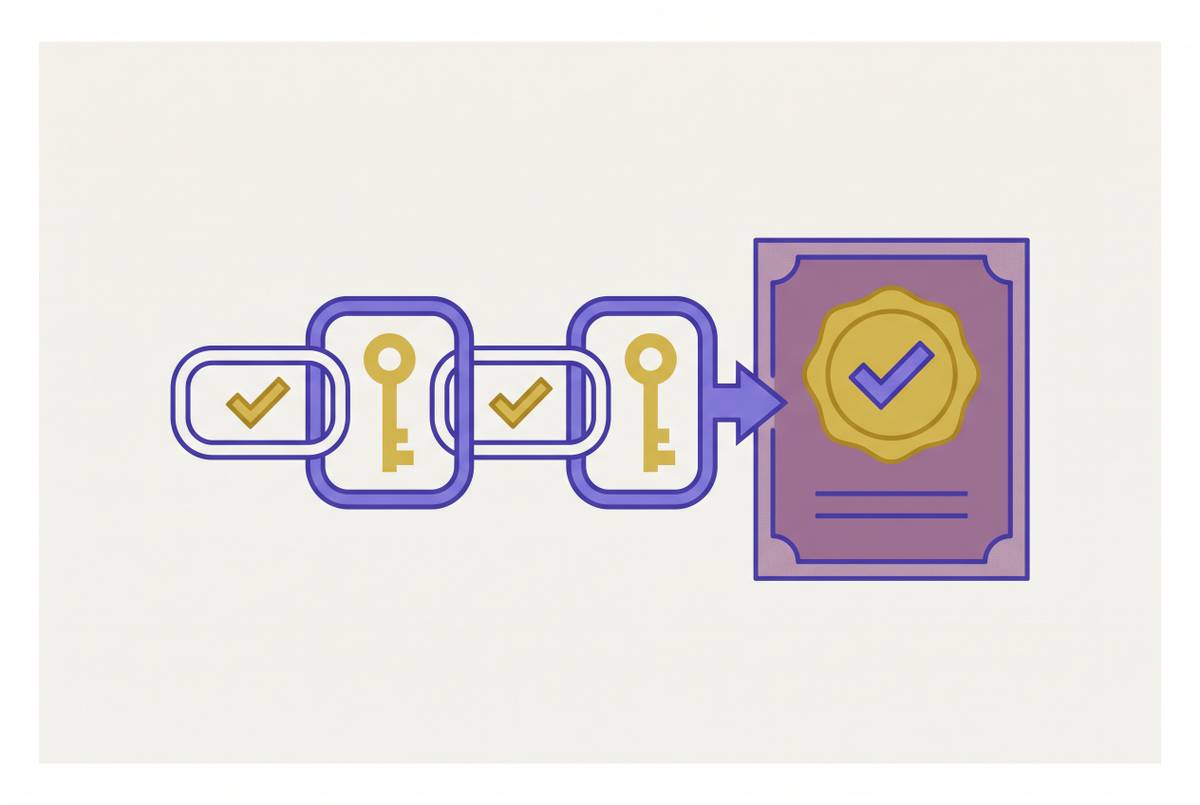
A build environment with provenance embedded in it has one defining property: identical source inputs always produce an identical, cryptographically verifiable output. ActiveState's 2026 guide puts the standard in concrete terms. Achieving that property means locking down several layers at once: the language runtime, every direct and transitive dependency, the compiler version, the system-level libraries, and the environment variables the build depends on.
Functional package managers make this possible by treating dependencies as pure functions of their inputs: the same inputs produce the same output every time, packages live in content-addressed directories identified by a cryptographic hash, and multiple versions of the same package can sit side by side without conflict. Nix applies this same model: it treats packages as pure functions of their inputs, so identical inputs guarantee identical outputs, and a 2026 practical guide to Nix confirms this is the tool's core answer to environment drift.
SLSA (Supply-chain Levels for Software Artifacts) gives this idea an architecture it can live in. At SLSA Level 3, build environments are isolated and ephemeral, which prevents one build from influencing another, and the provenance record produced is unforgeable by the build steps themselves. The hermetic property defeats the drift vector directly: if a build process has no outbound network access while it runs, a dependency simply cannot update itself mid-build, silently or otherwise.
In practice, the unit that makes all of this auditable is the declarative manifest: a human-readable, version-controlled file that states every pinned input explicitly. So instead of the familiar build-scan-tag-push cycle, you get something closer to a diff review. Paired with this, each deployed artifact carries an input-derived hash, so if a new CVE comes out, a team can match the hash directly instead of rescanning every image across the entire estate.
SLSA levels, SBOMs, and the auditable regulatory-grade record
By 2026, the expected baseline for a production CI/CD pipeline has converged around three controls working in concert: SLSA Level 3 builds that are hermetic, reproducible, and signed; a complete software inventory generated and attached to every released artifact; and cryptographic signatures on every container image and binary, verified at the point of admission into production. None of these three controls does much on its own. Together, they form the record regulators and auditors are increasingly asking to see.
The SBOM matters because it is generated at build time, not reconstructed after the fact, and it gives a complete, versioned inventory of every component inside an artifact. Software supply chain visibility is turning into a product security requirement, and regulators now ask for SBOM adoption as the mechanism to enforce it.
Drift in the environment behind that paperwork makes it meaningless. An SBOM generated from a drifted build environment documents what was supposed to be present rather than what actually ran, making it a record of intent. Provenance without reproducibility is documentation theater: the paperwork exists, but it describes a system that no longer matches the one in production. This is the direct link between eliminating drift and satisfying a regulator. For organizations working toward SOC 2 or ISO 27001, unmanaged local installations create a shadow IT problem of their own: if some developers are building inside environments nobody governs, no auditor can state with confidence that any developer is operating within the baseline the organization claims to enforce. Under those frameworks, environment governance is a compliance gate, not a nice-to-have.
Drift governance across the development lifecycle
Drift governance is a set of properties enforced continuously, from the moment a developer first activates an environment to the moment an artifact reaches production.
At the developer layer, the goal is a one-command environment activation that reproduces what the manifest specifies, on any machine, any architecture, any operating system.
The S3C2 Summit 2025-09 proceedings single out network-isolated builds specifically as a stronger safeguard than reputation scores, a distinction that matters because reputation-based checks can be gamed in ways that a hard network boundary cannot.
At the production layer, the input-derived hash earns its keep.
Multi-architecture consistency closes a gap that is easy to overlook until it causes an outage: an environment that behaves identically on Linux and macOS, on x86-64 and ARM, removes an entire class of drift where the build server's architecture quietly diverges from the developer's own machine. A 2026 guide to cross-compilation for multi-platform releases makes the case that cross-compilation, best handled through language-native toolchains orchestrated inside a single CI pipeline, shortens release cycles and guarantees binary parity across targets, while cautioning against matrix strategies specifically for artifact generation. Tie all of this together with version-controlled environments that a team can call up by name, pull on demand, and roll back atomically to a prior generation, and the space between "what was reviewed" and "what is actually running" closes without anyone having to manually rebuild an environment from memory.
Why platform engineering teams own the drift problem organizationally
Environment drift is, at bottom, an organizational problem wearing an infrastructure costume. No individual developer can be expected to enforce provenance governance on their own initiative, and no security team can staple governance onto a pipeline after the fact and expect it to hold. Only a platform engineering team, sitting between the two, can make the governed environment the easiest path developers take.
The model that actually works is extensible base environments, not rigid mandates handed down from above. If teams instead offer a governed base environment developers can extend within clear boundaries, they tend to close the gap between what compliance requires and what developers will actually adopt. Tool fragmentation, developers running different local setups that live entirely outside any governed baseline, is a real cost to both productivity and security wherever environment governance is absent.
AI coding agents raise the stakes further. Giving agents structured, scoped tool interfaces instead of raw shell access demands the same discipline already required of human developers: pinned inputs, declared permissions, and an execution context that can be audited after the fact. The 2026 Guide to Software Supply Chain Security describes this as the present state of the industry, not a future concern: the shift from static SBOMs to agentic governance has already happened, and as agents generate and consume packages at scale, the provenance and environment controls that matter for human developers matter at least as much for the automated ones now working alongside them.
Provenance embedded in the build environment is the architectural property that makes every other security and reliability control actually trustworthy, the ground truth that a scan, an SBOM, or a signature can only be as good as. If platform teams make it the default rather than the exception, they remove drift as a compounding risk, give security teams something real to audit, satisfy regulatory obligations without stacking on another layer of tooling, and give every developer an environment that behaves the same way everywhere it runs.